

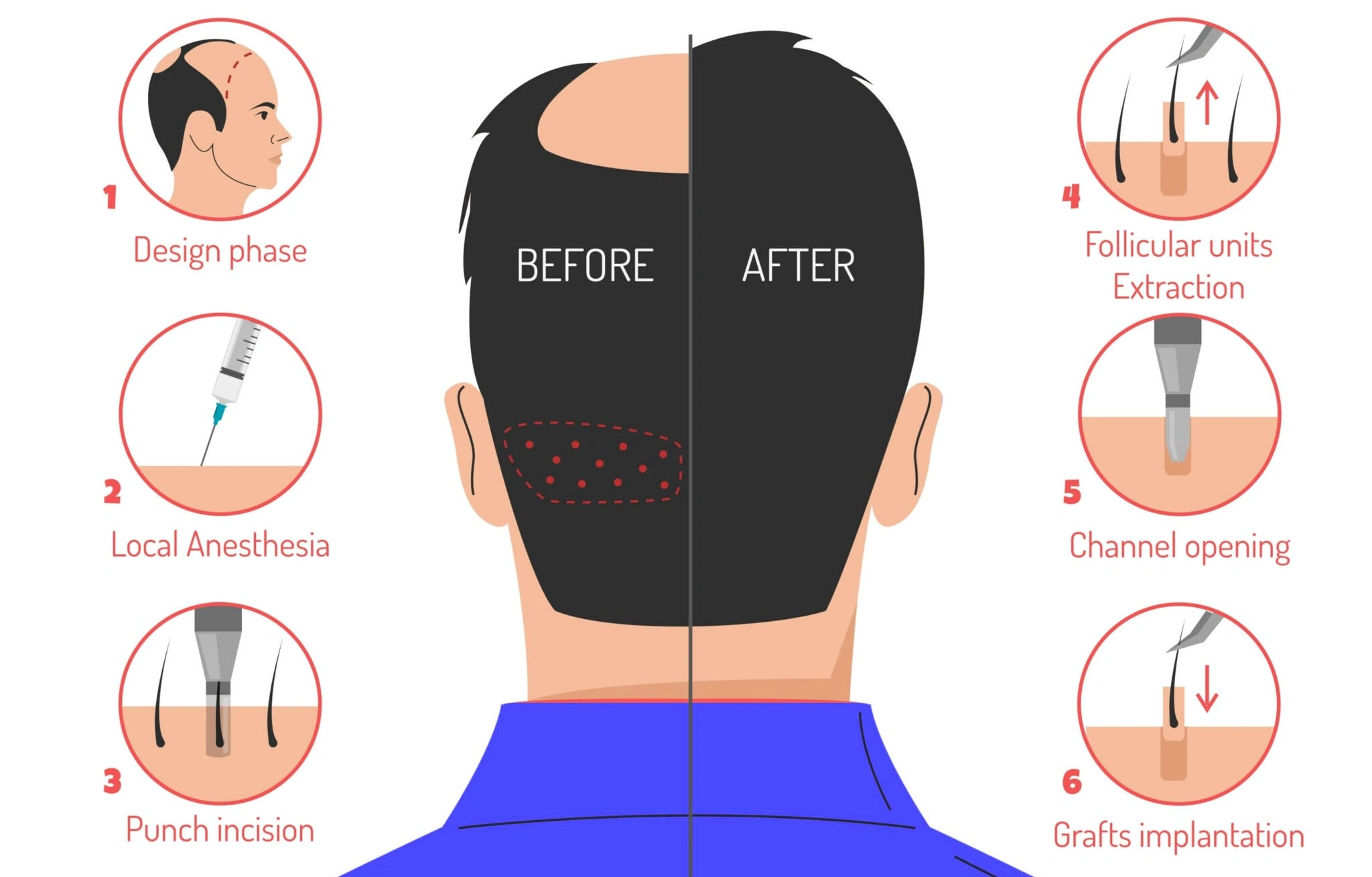
An FUE hair transplant (Follicular Unit Extraction) is a minimally invasive surgical hair restoration technique where individual follicular units are harvested from a permanent donor zone and relocated to thinning areas. It is the preferred method in Malaysia due to its natural-looking results, lack of linear scarring, and rapid patient recovery.
What Is FUE Hair Transplant?
FUE hair transplant is a sophisticated method of surgical hair restoration. Unlike the traditional Follicular Unit Transplantation (FUT) or “strip method,” FUE involves extracting individual grafts directly from the scalp.
This procedure targets the occipital scalp—the area at the back of the head—where hair is genetically programmed to resist the effects of Dihydrotestosterone (DHT), the primary hormone responsible for hair follicle miniaturization.
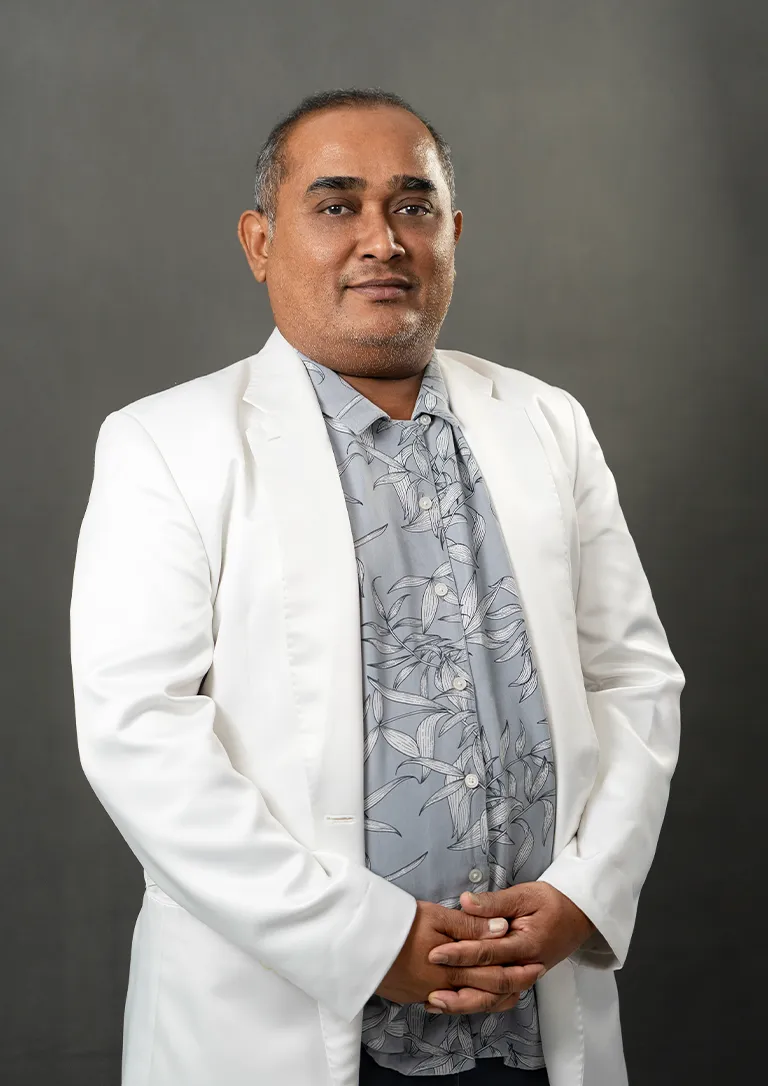
Dr. Mohd Ali applies decades of clinical experience in treating androgenetic alopecia using precision-guided extraction and natural hairline design. His approach focuses on individualized planning and typically results in improved hair density and natural-looking restoration outcomes.
How FUE Hair Transplant Works
The success of FUE lies in the donor dominance principle. This means transplanted hair retains its resistance to balding even when moved to a different location on the scalp.
Follicular Unit Extraction (FUE) Technique Explained
Using a specialized micro-punch tool (manual or motorized), the surgeon makes a tiny circular incision around a natural grouping of 1 to 4 hairs. These “units” are then extracted with fine forceps, ensuring the hair bulb and surrounding tissue remain intact for maximum viability.
Step-by-Step FUE Procedure
Mapping: The surgeon marks the new hairline, considering facial symmetry and future aging.
Local Anesthesia: The scalp is numbed to ensure a painless experience.
Extraction: Grafts are harvested one by one, often using a scattered pattern to maintain donor density.
Incisions: The doctor creates recipient sites using sapphire blades or needles, determining the angle and direction of growth.
Placement: Grafts are delicately inserted into the sites, often using Choi Implanter Pens in DHI (Direct Hair Implantation) variations.
Who Is Suitable for FUE Hair Transplant?
Not everyone is an immediate candidate. A clinical evaluation using the Hamilton-Norwood Scale or the Ludwig Scale for women is essential to determine the stage of hair loss.
Male Pattern Baldness
Men with androgenetic alopecia who have stable donor hair at the back and sides are the most common candidates for FUE.
Female Hair Loss
Women with “Christmas tree” thinning patterns can benefit, provided their hair loss isn’t caused by systemic issues like iron deficiency or telogen effluvium.
Hairline Restoration Cases
Patients with a high forehead or a “receding” look can use FUE to achieve better facial framing and a more youthful appearance.
Beard and Eyebrow Transplant Candidates
FUE is highly effective for non-scalp areas. Fine hairs from the nape can be used for eyebrow reconstruction, while thicker follicles are ideal for beard density enhancement.
Causes of Hair Loss Treated with FUE
Identifying the underlying cause of alopecia ensures the transplant is a long-term success.
Genetics (Androgenetic Alopecia)
The most common cause, where follicles shrink over time. FUE provides a permanent solution by moving “immune” follicles to the affected zones.
Stress and Lifestyle Factors
While acute stress causes temporary shedding, chronic oxidative stress can trigger early-onset thinning in those with a genetic predisposition.
Medical Conditions
Conditions like hypothyroidism or autoimmune issues can cause thinning. FUE is often recommended once the primary medical condition is stabilized.
Traction Alopecia
This results from constant pulling (braids or tight buns). FUE is excellent for restoring hair to scarred or damaged follicles caused by physical tension.
FUE Hair Transplant Procedure in Malaysia
Malaysia is a premier destination for medical tourism, governed by strict Ministry of Health (MOH) guidelines to ensure patient safety and clinical excellence.
Consultation and Hair Analysis
Surgeons use digital trichoscopy to assess graft-to-hair ratios and scalp health. This data-driven approach prevents “over-harvesting” of the donor area.
Donor Area Extraction
In Malaysia, many clinics offer No-Shave FUE (Long Hair FUE) for high-profile clients who cannot afford the “shaven head” look during the healing phase.
Graft Preparation
Once removed, grafts are placed in a chilled bio-storage solution or Platelet-Rich Plasma (PRP) to maintain cellular hydration and increase the survival rate of the dermal papilla.
Implantation Process
The surgeon meticulously places single-hair grafts at the very front of the hairline and multi-hair grafts further back to create natural visual density.
Clinical Experience: Advanced clinics now utilize Sapphire FUE, where blades made from precious gemstones create smaller, cleaner channels. This results in less tissue trauma and faster scabbing resolution.
FUE Hair Transplant Results Timeline
Hair restoration is a marathon, not a sprint. The biological growth cycle dictates the timeline.
First 1–2 Weeks After Procedure
The “healing phase.” Tiny crusts form and eventually flake off. You may experience minor periorbital edema (swelling around the forehead).
1–3 Months Shedding Phase
Also known as “Shock Loss.” The transplanted hair shafts fall out as the follicles enter a resting (telogen) phase. This is a normal sign that the follicle is resetting.
4–6 Months New Hair Growth
Fine, “baby hairs” begin to emerge. Approximately 40-60% of the final growth is visible during this stage.
9–12 Months Final Results
The hair gains caliber and length. By the one-year mark, the full aesthetic impact of the transplant is realized, and the hair can be cut and styled normally.
FUE Hair Transplant Cost in Malaysia
Malaysia offers some of the most competitive cost-per-graft rates globally, often significantly lower than in Australia or Europe.
Cost Factors Affecting Price
Prices are influenced by the complexity of the “megasession” and whether supplementary treatments like Exosome therapy or PRP are included.
Number of Grafts Required
A typical session ranges from 1,500 to 4,000 grafts. Most Malaysian clinics provide transparent, all-inclusive packages based on these numbers.
Clinic Reputation and Surgeon Experience
Experienced surgeons with memberships in the ISHRS (International Society of Hair Restoration Surgery) may have higher fees but offer lower transection rates (wasted follicles).
Benefits of FUE Hair Transplant
Natural Hairline Results: No “doll’s hair” look; the placement mimics nature.
Minimal Scarring: Tiny “dot” scars are virtually invisible to the naked eye.
Faster Recovery Time: Most patients return to the gym or office within a week.
Permanent Hair Growth: Relocated follicles continue to grow for a lifetime.
Risks and Side Effects of FUE
While FUE is low-risk, it is still a surgical procedure.
Temporary Swelling and Redness
Minor inflammation is expected. Clinics often provide a post-op headband to prevent fluid from draining into the face.
Shock Loss
Temporary shedding of non-transplanted hair can occur due to the “trauma” of surgery but almost always regrows.
Infection Risks
Following strict sanitization protocols and using prescribed antibiotic ointments virtually eliminates this risk.
Uneven Growth (Rare Cases)
If the graft survival rate is low due to poor handling, the result may look thin. Choosing a clinic with a high “take rate” is crucial.
FUE vs FUT Hair Transplant
Understanding the two primary methods of follicular unit relocation.
| Feature | FUE (Extraction) | FUT (Strip) |
| Scarring | Hypopigmented dots | Linear scar |
| Graft Yield | High | Maximum |
| Invasiveness | Minimally Invasive | Surgical Excisions |
| Best For | Short hairstyles | Maximum coverage/Large balding |
Which Method Is Better for You?
FUE is the modern choice for 90% of patients. However, those with very tight scalps or those requiring 5,000+ grafts might be advised to consider a “staged” FUE approach.
Recovery and Aftercare Tips
The post-operative care you provide determines the longevity of your investment.
First 7 Days Care
Avoid all contact with the recipient area. Use a spray bottle for hydration as instructed by your trichologist.
Sleeping Position Guidelines
Sleep on your back with two pillows to keep your head at a 45-degree angle. This prevents the grafts from touching the pillow and reduces edema.
Washing Hair After FUE
Only use the “pour-over” method with lukewarm water and a specialized low-chemical shampoo provided by the clinic.
Activities to Avoid
Avoid high-intensity interval training (HIIT), saunas, and direct UV exposure for 14 days to prevent graft dislodgement.
Before and After Results of FUE Hair Transplant
In 2026, many Malaysian clinics use AI-driven simulations to show potential results. Ensure you view “real-life” photos of patients with similar hair textures to yours (e.g., straight, wavy, or coarse).
Why Choose FUE Hair Transplant in Malaysia?
Malaysia is globally recognized for healthcare quality, offering fluent English-speaking specialists, JCI-accredited facilities, and a seamless experience for international patients.
Choosing the Right Hair Transplant Clinic in Malaysia
Your results are only as good as your surgeon’s hands.
Surgeon Experience and Credentials
Look for doctors specializing in LHR (Limb Hair Restoration) or those with extensive experience in Asian hair types, which often have unique follicle angles.
Technology and Equipment Used
Ensure the clinic uses High-Definition (HD) Microscopes for graft inspection to ensure only the healthiest follicles are implanted.
Patient Reviews and Results Gallery
Cross-reference reviews on platforms like Google and RealSelf to verify the clinic’s track record with long-term growth success.
Frequently Asked Questions About FUE Hair Transplant
How long does an FUE procedure take?
Most sessions take between 6 to 8 hours. Large “megasessions” exceeding 3,000 grafts may be split over two consecutive days to ensure surgeon precision and graft health.
Can I use body hair for an FUE transplant?
Yes, this is known as BHT (Body Hair Transplant). If your scalp donor area is weak, follicles can be harvested from the beard or chest, though scalp hair remains the first choice for texture matching.
Will my transplanted hair turn gray?
Transplanted hair behaves like the hair it was taken from. If your donor hair at the back of your head turns gray, the transplanted hair will eventually do the same.
When can I wear a hat after FUE?
You should wait at least 7 to 10 days before wearing a loose-fitting hat. Tight hats or helmets should be avoided for at least 3 weeks to prevent graft compression.
Is the FUE procedure safe for everyone?
Most healthy adults are candidates. However, those with uncontrolled diabetes, active scalp infections, or certain blood disorders may need to clear these issues with a doctor first.
Book Consultation for FUE Hair Transplant in Malaysia
Don’t wait for your hair to disappear completely. Early intervention yields the best results. Contact a leading Malaysian hair restoration center today for a comprehensive scalp analysis.