

Thinking about getting your hairline back? You’re not alone. Malaysia has become a massive hub for medical tourism, especially for those looking to fix thinning crowns or receding temples. But before you book that flight to KL or Penang, you need to know if you’re actually a good hair transplant candidate. It’s not just about having the budget; it’s about having the right “raw materials” to work with.
Best Aesthetic Specialist Malaysia offers world-class FUE hair transplant procedures, combining surgical precision with natural-looking results to effectively restore your hair density and confidence with minimal downtime.
What Is a Hair Transplant Candidate?
In simple terms, a candidate is someone with enough healthy hair on the back and sides of their head to move to the thinning areas. Think of it like gardening: you’re transplanting hardy shrubs from a lush backyard to a patchy front yard. If the backyard is empty, the project won’t work.
Types of Hair Loss Suitable for Hair Transplant

Male Pattern Baldness
This is the most common reason guys seek help. Also known as androgenetic alopecia, it usually follows a predictable path—receding temples or a thinning crown. If you have a clear “horseshoe” pattern of hair left, you’re likely in the running.
Female Pattern Hair Loss
For women, hair loss is often more diffuse (thinning all over). This can be trickier because the “donor” area might also be thinning. However, women with distinct thinning on the top but thick hair at the back are often great candidates.
Hair Loss From Scars or Injury
If you have a scar from an accident or surgery where hair no longer grows, a transplant can often “fill in” that gap, provided the scar tissue has a healthy blood supply.
Age & Hair Loss Stability
Minimum Age for Hair Transplant
While there’s no “illegal” age, most ethical surgeons in Malaysia recommend waiting until at least 25 or 30. Why? If you transplant hair at 21, you might continue to lose your original hair around the transplant, leaving you with weird “islands” of hair later in life.
Stable vs Progressive Hair Loss
Surgeons want to see that your hair loss has stabilized. If you’re losing clumps of hair every week, it’s better to manage that with medication first before jumping under the needle.
Donor Area Evaluation
Donor Hair Density & Quality
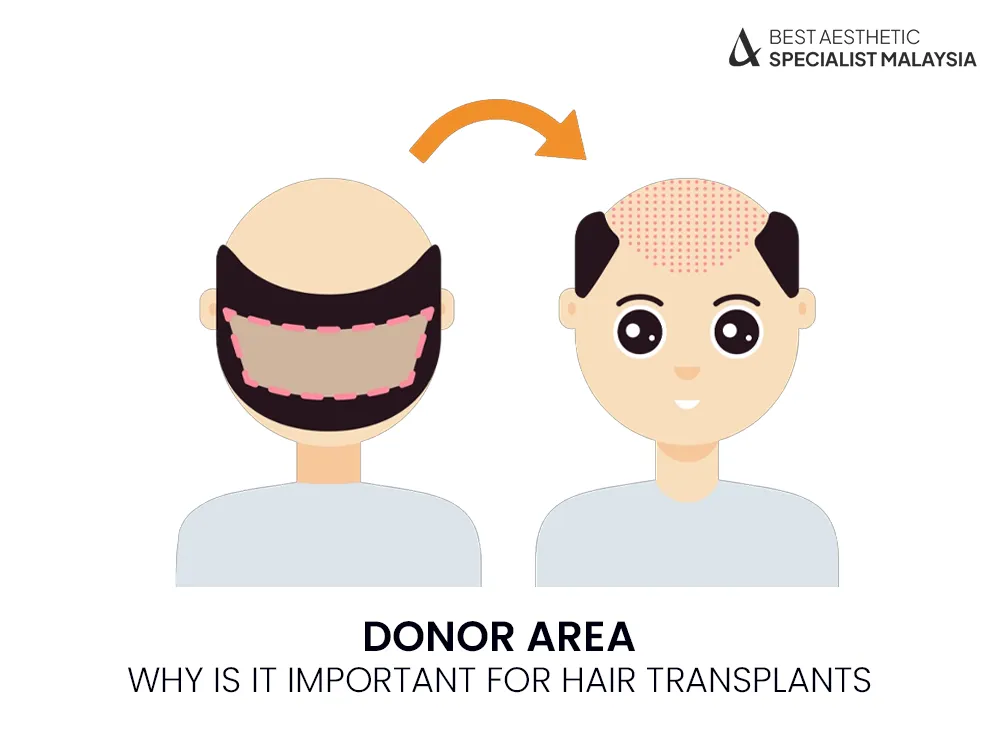
The “donor area” is the back of your head. High density (lots of hairs per square centimeter) means more grafts are available. If your donor hair is thin or wispy, the coverage in the front won’t look as full.
Safe Donor Zone Assessment
The International Society of Hair Restoration Surgery emphasizes the “Safe Donor Zone.” This is the area where hair is genetically programmed to never fall out. A good surgeon ensures they only take hair from this specific permanent zone.
Scalp & Hair Characteristics
Scalp Health & Skin Conditions
A healthy scalp is a must. If you have active psoriasis, dermatitis, or alopecia areata, those need to be treated first. Inflammation is the enemy of a successful graft.
Hair Thickness, Texture & Curl
Believe it or not, curly hair often provides better visual “coverage” than pin-straight hair. Similarly, thicker hair shafts create a denser look with fewer grafts.
Medical & Lifestyle Factors
Medical Conditions Affecting Candidacy
Conditions like uncontrolled diabetes or blood clotting disorders can affect healing. It’s vital to be transparent with your doctor about your medical history to ensure you can recover safely.
Medications, Smoking & Lifestyle Habits
Smoking constricts blood vessels, which can literally starve your new grafts of oxygen. Most Malaysian clinics will ask you to quit smoking at least two weeks before and after the procedure.
Hair Transplant Candidate by Procedure Type
FUE Hair Transplant Candidate
Follicular Unit Extraction (FUE) is perfect for people who like to wear their hair short. Since it involves picking individual follicles, it doesn’t leave a linear scar. It’s the “gold standard” for most modern patients.
FUT Hair Transplant Candidate
Follicular Unit Transplantation (FUT), or the “strip method,” is often better for patients who need a massive number of grafts in one go. It usually requires a longer healing time but can be more cost-effective for major balding.
DHI Hair Transplant Candidate
Direct Hair Implantation (DHI) is a variation of FUE. It’s great for those who want high-density placement or “shave-less” transplants, where you don’t have to buzz your whole head for the procedure.
Expectations & Commitment
Realistic Results & Hair Density
You aren’t going to have your 16-year-old hairline back. A transplant is about restoration and framing the face, not infinite thickness. Managing your expectations is key to being a happy patient.
Post-Procedure Care Compliance
The surgery is only half the battle. You have to commit to the aftercare—spraying the grafts, sleeping upright, and avoiding the gym. If you can’t follow rules for 10 days, you aren’t a candidate yet!
Who Is Not a Suitable Hair Transplant Candidate
Poor Donor Area or Scalp Conditions
If the back of your head is as thin as the top, there’s nothing to move. In these cases, Scalp Micropigmentation might be a better alternative.
Uncontrolled or Active Hair Loss
If your hair is falling out due to stress, medication, or a temporary condition (Telogen Effluvium), a transplant is not the answer. You need to stop the leak before you try to refill the tank.
Unrealistic Expectations
If you expect a “perfect” head of hair despite being completely bald, you’ll likely be disappointed. Surgeons prefer patients who understand the limitations of the procedure.
Hair Transplant Evaluation & Consultation in Malaysia
Candidate Assessment Process
In Malaysia, top clinics use digital imaging to count your grafts. They’ll look at your hairline design and calculate exactly how many “follicular units” you need to reach your goals.
Tests, Scalp Analysis & Medical Screening
Expect a “Tricho-analysis” (a high-powered zoom of your scalp) and possibly some blood tests. This ensures your hair loss isn’t caused by an underlying deficiency, like iron or Vitamin D, which would make a transplant unnecessary.