


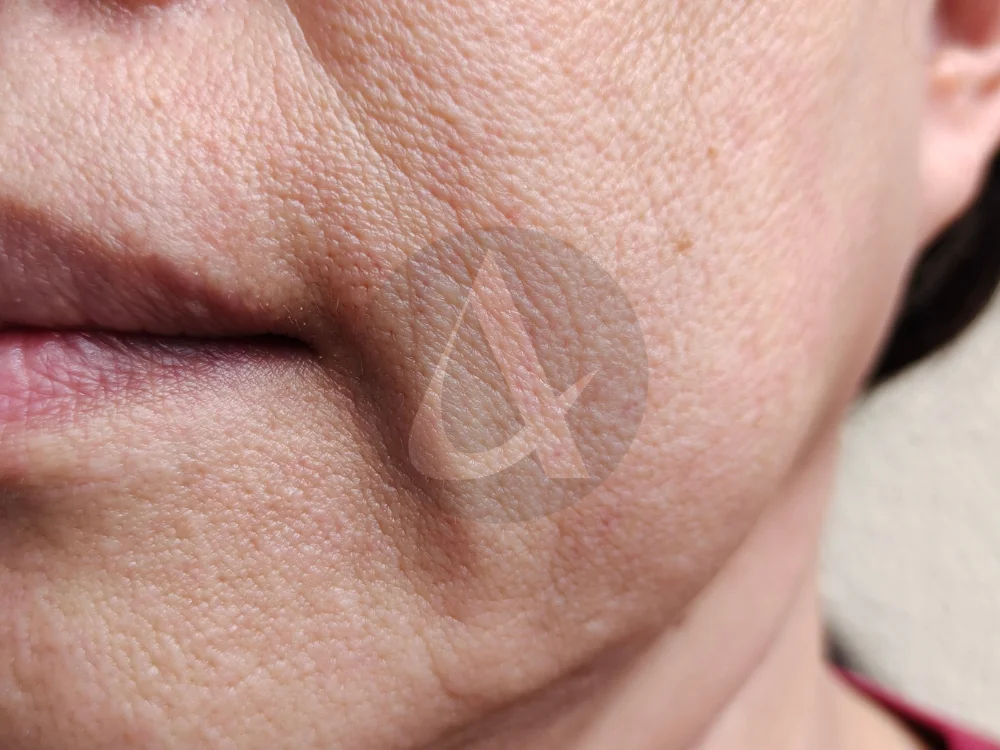
Smile lines, or laugh lines, are facial creases that appear around the corners of the mouth and eyes, primarily becoming visible during facial expressions. Technically known as nasolabial folds when located between the nose and mouth, these lines are a natural sign of aging caused by collagen loss and repeated muscle movement.
What Are Smile Lines?
Smile lines are primarily vertical creases that run from the sides of the nose to the corners of the mouth. While they are often associated with joy and a life full of laughter, they can become permanent deep grooves over time, even when the face is at rest.
Difference Between Smile Lines and Nasolabial Folds
While often used interchangeably, there is a technical distinction:
Smile Lines: A general term for wrinkles around the mouth and “crow’s feet” near the eyes.
Nasolabial Folds: The specific deep lines that delineate the transition between the cheeks and the upper lip.
Why Smile Lines Become More Visible With Age
As we age, the skin’s structural integrity weakens. The fat pads in our cheeks begin to descend due to gravity, and the production of collagen and elastin—the proteins responsible for skin “snap-back”—decreases significantly after age 25.
Common Areas Affected by Smile Lines
Peri-oral Area: The most common site, extending from the nose to the mouth.
Peri-orbital Area: Fine lines at the outer corners of the eyes, often called laugh lines.
What Causes Smile Lines?
Understanding the triggers helps in choosing the right corrective path.
Natural Aging and Collagen Loss
The primary driver is the biological clock. As dermal density thins, the skin can no longer resist the folding caused by muscle contractions.
Repeated Facial Expressions
Smile lines are “dynamic wrinkles” before they become static. The mechanical action of smiling, talking, and laughing eventually etches these lines into the skin.
Sun Damage and Environmental Factors
Malaysia’s intense UV index accelerates photoaging. UV rays break down collagen fibers, leading to “solar elastosis” where the skin becomes thick and deeply wrinkled.
Dehydration and Skin Elasticity Loss
Dehydrated skin lacks the plumpness needed to hide minor creases. In Malaysia’s humid climate, many people paradoxically suffer from dehydrated skin due to constant air conditioning.
Lifestyle Habits That Worsen Smile Lines
Smoking: Reduces blood flow to the skin and damages collagen.
Sleep Position: Sleeping on your side can compress the face, deepening folds.
Weight Fluctuations: Rapid weight loss reduces facial fat, causing the skin to sag.
Who Gets Smile Lines?
Smile Lines in Your 20s and 30s
In younger adults, these lines are usually “dehydration artifacts.” They appear mostly when smiling and disappear when the face is neutral.
Smile Lines in Mature Skin
In your 40s and beyond, lines often become “static,” meaning they are visible even without expression due to significant volume loss in the mid-face.
Genetic Factors and Facial Structure
If your parents have deep nasolabial folds, you are more likely to develop them. Facial anatomy, such as prominent cheekbones, also plays a role in how skin “drapes” over the face.
How to Prevent Smile Lines Naturally
Daily Skincare Habits for Anti-Aging
Consistency is key. Using a gentle cleanser and focusing on lipid-restoring moisturizers helps maintain a supple surface.
Importance of Sunscreen and Hydration
Applying a broad-spectrum SPF 50+ is the most effective way to prevent collagen degradation. Drinking adequate water and using hyaluronic acid serums keeps skin cells plump.
Facial Exercises and Massage Techniques
Gua Sha or manual lymphatic drainage can help reduce the fluid buildup that makes the cheek area heavy, which in turn reduces the pressure on the nasolabial fold.
Diet and Lifestyle Changes for Skin Health
A diet rich in Omega-3 fatty acids and antioxidants helps fight oxidative stress that leads to premature wrinkles.
Non-Surgical Treatments for Smile Lines
Dermal Fillers for Smile Lines
Hyaluronic Acid (HA) fillers are the “gold standard.” They provide instant volume to “lift” the fold.
Skin Boosters and Collagen Stimulators
Treatments like Profhilo or Sculptra don’t just fill space; they signal the body to grow its own collagen for a natural look.
Laser Treatments for Skin Tightening
Fractional CO2 or Pico Lasers create micro-injuries that trigger the skin’s repair mechanism, smoothing out the surface.
Radiofrequency and Ultrasound Treatments
HIFU (High-Intensity Focused Ultrasound) targets the deep layers of the skin to lift sagging cheeks, which reduces the fold.
Microneedling and PRP Therapy
This stimulates the body’s natural healing response to thicken the dermis and improve texture.
Best Aesthetic Specialist Malaysia Insight:
We often find that patients mistakenly ask for filler directly into the smile line. However, our clinical experience shows that the best results come from “lateral lifting”—adding volume to the cheeks to pull the skin upward. This prevents the “overfilled” look around the mouth.
Surgical Options for Deep Smile Lines
Facelift Procedures
For severe sagging that non-surgical methods cannot fix, a facelift offers a permanent structural repositioning of facial tissues.
Fat Grafting for Volume Restoration
Autologous fat transfer uses your own fat to restore lost volume in the cheeks and mouth area.
When Surgery May Be Considered
Surgery is typically considered when there is significant skin laxity that dermal fillers can no longer adequately support.
Best Ingredients for Smile Line Reduction
Retinol/Retinoids: Speeds up cell turnover and collagen production.
Hyaluronic Acid: Provides essential moisture to “fill” fine lines.
Peptides: Serve as building blocks for skin proteins.
Antioxidants: Vitamin C and E protect against environmental damage.
What to Expect From Smile Line Treatments
| Treatment | Result Visibility | Longevity |
| Dermal Fillers | Immediate | 9–18 Months |
| HIFU | 2–3 Months | 12 Months |
| Skin Boosters | 1–2 Weeks | 6 Months |
Smile Line Treatment Side Effects and Safety
Common temporary effects include mild redness or bruising. To ensure safety, always verify that your clinic is registered with the Ministry of Health (MOH) Malaysia. Ensure your practitioner is LCP-certified to minimize risks.
How Much Does Smile Line Treatment Cost in Malaysia?
Dermal Fillers: RM 1,500 – RM 3,000 per syringe.
HIFU: RM 2,500 – RM 5,000 per session.
Skin Boosters: RM 1,200 – RM 2,500 per session.
Pricing depends on the severity of the lines and the volume of product required.
Frequently Asked Questions About Smile Lines
What are the main causes of smile lines?
The primary causes are the natural loss of collagen, repeated facial expressions, and sun damage.
Can smile lines be removed naturally?
While you cannot “remove” deep folds naturally, you can soften them through hydration, retinoids, and facial massages.
What is the best treatment for deep smile lines?
Dermal fillers are typically the most effective for immediate results, while HIFU is best for addressing the underlying sagging.
How much does smile line treatment cost in Malaysia?
Expect to pay between RM 1,500 and RM 4,500 depending on the specific treatment chosen.
Are smile line treatments safe?
Yes, when performed by an LCP-certified doctor using MDA-approved products, these treatments have a very high safety profile.