
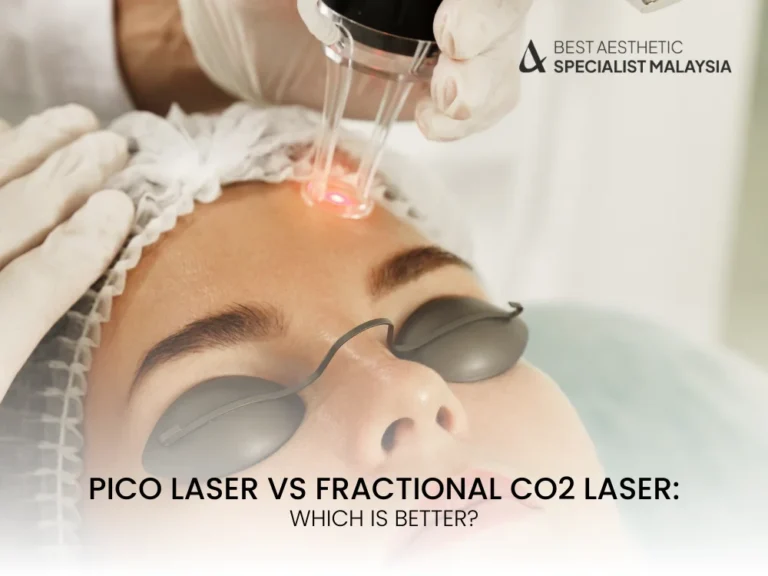


A Simple Guide to Pico Laser vs Fractional CO2 Laser
If you’re researching skin treatments, you’ve probably come across the debate of pico laser vs fractional CO2 laser. Both are powerful options used across Malaysian aesthetic clinics to treat pigmentation, acne scars, wrinkles, and texture issues. But how exactly do they differ? Which one is safer, faster, or more effective for your concern?
This guide breaks everything down in clear, easy-to-understand language so you can make a confident choice.
Understanding Pico Laser vs Fractional CO2 Laser
What Is Pico Laser?
Pico laser uses picosecond pulses—ultra-short bursts of energy that shatter pigmentation and stimulate collagen without overheating the skin.
Popular pico devices include PicoSure, PicoPlus, Discovery Pico, and PicoCare.
Best for:
- Pigmentation (melasma, sunspots, freckles)
- Acne marks
- Mild acne scars
- Skin brightening
- Tattoo removal
- Uneven skin tone
What Is Fractional CO2 Laser?
Fractional CO2 laser is an ablative laser, meaning it creates controlled micro-injuries on the skin surface to trigger regeneration. It removes damaged skin cells and stimulates strong collagen remodeling.
Best for:
- Deep acne scars
- Wrinkles and aging skin
- Rough texture
- Enlarged pores
- Stretch marks
Devices commonly used include SmartXide DOT, MiXto, Fraxis Duo, and other fractional CO2 platforms.
Pico Laser vs Fractional CO2 Laser: Key Differences
Below is a clear comparison table.
Feature | Pico Laser | Fractional CO2 Laser |
Type of laser | Non-ablative | Ablative |
Downtime | 0–2 days | 5–14 days |
Pain level | Mild | Moderate to high |
Best for | Pigmentation, brightening | Deep scars, wrinkles |
Safety for Asian skin | Very safe | Needs careful settings |
Risk of PIH | Low | Higher |
Sessions needed | 3–8 | 1–3 |
Strength | Gentle but effective | Aggressive resurfacing |
Results | Gradual, natural | Dramatic, stronger changes |
When to Choose Pico Laser
1. You Have Pigmentation
Pico laser is a top choice for:
- Melasma
- Freckles
- Lentigenes
- Sunspots
- PIH (acne marks)
Its ultra-fast pulses break pigment into tiny particles without heating surrounding skin excessively.
2. You Want Minimal Downtime
Most people return to work or school the next day.
3. You Want Safer Treatment for Asian Skin
Because it generates very little heat, pico laser has a lower risk of:
- PIH
- Redness
- Burns
4. You Prefer Gradual, Natural Brightening
Pico laser improves radiance, tone, and clarity over multiple sessions.
When to Choose Fractional CO2 Laser
1. You Have Deep Acne Scars
Fractional CO2 laser is powerful for:
- Boxcar scars
- Rolling scars
- Deep texture issues
It resurfaces the skin from the inside out.
2. You Want More Dramatic Results
One CO2 session can achieve what 3–4 non-ablative sessions might.
3. You Want Anti-Aging Benefits
Fractional CO2 laser helps with:
- Fine lines
- Deep wrinkles
- Sagging texture
- Sun-damaged skin
4. You Can Tolerate Downtime
Expect:
- Redness
- Scabbing
- Peeling
for 5–14 days, depending on settings.
Pico Laser vs Fractional CO2 Laser for Specific Skin Concerns
Pigmentation
Winner: Pico Laser
Fractional CO2 laser may worsen melasma because heat can trigger the pigment cycle. Pico laser is the safer choice for:
- Hyperpigmentation
- Uneven skin tone
- Dark marks
Acne Scars
Winner: Fractional CO2 Laser
Pico laser helps with mild scars, but CO2 laser is more effective for:
- Deep boxcar scars
- Dermal scars
- Ice-pick scars (with TCA CROSS)
Some clinics combine:
- Subcision + CO2 laser
for stronger improvements.
Skin Brightening
Winner: Pico Laser
Pico laser provides:
- Glow
- Clarity
- Radiance
This is why it’s popular among younger adults and first-time laser patients.
Wrinkles & Aging Skin
Winner: Fractional CO2 Laser
Because it stimulates deeper collagen remodeling, CO2 laser is ideal for:
- Fine lines
- Deep wrinkles
- Crepey skin
Enlarged Pores
Winner: Tie (depends on pore severity)
- Mild pores: Pico laser is enough
- Severe pores: CO2 laser works faster
Tattoo Removal
Winner: Pico Laser
Pico laser is the gold standard because it:
- Breaks ink into smaller particles
- Works on multiple ink colours
- Requires fewer sessions
Downtime Comparison of Pico Laser vs Fractional CO2 Laser
Pico Laser Downtime
- Redness for 1–24 hours
- Mild tingling or dryness
- Makeup usually safe after 24 hours
Fractional CO2 Downtime
- Redness: 3–7 days
- Crusting: 5–10 days
- Peeling: 5–14 days
- Sun sensitivity: several weeks
If you need a no-downtime option, choose pico laser.
Pain Levels of Pico Laser vs Fractional CO2 Laser
Pico Laser
- Feels like tiny “snaps” or tingles
- Mostly tolerable
- Numbing may not be needed
Fractional CO2 Laser
- Feels warm, prickly, and intense
- Numbing cream is required
- Sometimes cooling devices or local anesthesia are used
How Many Sessions Pico Laser vs Fractional CO2 Laser Are Needed?
Pico Laser
Typically, 3–8 sessions are needed to achieve optimal results.
Sessions are usually spaced 3–6 weeks apart, allowing the skin time to heal and regenerate between treatments.
This laser works well for stubborn pigmentation, acne scars, and fine lines, but multiple sessions help gradually break down melanin and stimulate collagen for more even, radiant skin.
Fractional CO2 Laser
Generally, 1–3 sessions are sufficient for noticeable improvements.
Treatments are spaced 3–6 months apart, giving the skin enough time to recover from the more intensive resurfacing effects.
This laser is more aggressive, targeting deeper layers of the skin for significant texture improvement, scar reduction, and wrinkle smoothing, so fewer sessions are usually needed.
Tip: Your dermatologist will recommend a personalized plan based on your skin type, severity of concerns, and desired results. Combining the right laser with proper aftercare ensures maximum benefits with minimal downtime.
Safety Comparison Pico Laser vs Fractional CO2 Laser for Asian Skin
Pico Laser Safety
Very safe due to:
- Minimal heat
- Short pulses
- Low PIH risk
Fractional CO2 Safety
Safe only when:
- Settings are conservative
- Performed by an experienced doctor
- Proper aftercare is followed
PIH risk is higher.
Cost Comparison Pico Laser vs Fractional CO2 Laser (Estimated in Malaysia)
(No price instructions; purely informational)
Treatment | Average Per Session |
Pico Laser | RM300–RM1,200 |
Fractional CO2 Laser | RM800–RM2,500 |
CO2 laser costs more because it involves deeper resurfacing and longer recovery.
Which Pico Laser vs Fractional CO2 Laser Treatment Should You Choose?
Choose Pico Laser If You Want:
Bright, clear skin – Pico gently targets dullness and uneven tone to give your complexion a refreshed, radiant look.
Effective pigmentation removal – Great for melasma, sunspots, freckles, and post-acne marks without harsh resurfacing.
Minimal downtime – Most people experience only mild redness for a few hours, so you can return to normal activities quickly.
A safe option for Asian skin – Pico Laser reduces the risk of post-inflammatory hyperpigmentation (PIH), making it suitable for darker or sensitive skin types.
A gentler approach overall – Ideal if you’re new to laser treatments or prefer a lower-intensity method with gradual, buildable results.
Choose Fractional CO2 Laser If You Want:
Major acne scar improvement – Fractional CO2 penetrates deeper into the skin to remodel collagen and smooth out stubborn, textured acne scars that lighter lasers may not fully address.
Strong anti-aging results – It effectively targets wrinkles, fine lines, and skin laxity by stimulating significant collagen regeneration, giving a firmer, more youthful appearance.
Skin resurfacing – This treatment removes damaged outer layers of skin, improving rough texture, enlarged pores, and overall skin quality in a way that gentler lasers cannot.
More dramatic changes – If you’re looking for noticeable, long-lasting transformation in fewer sessions, CO2 delivers powerful results—ideal for those who can commit to some downtime.
Best Combination
For many patients, the most effective approach isn’t choosing one laser over the other—but strategically combining both. This allows you to treat multiple skin concerns without overwhelming the skin.
Many clinics often pair:
Pico Laser – to target pigmentation, dullness, and uneven tone while boosting overall skin radiance with minimal downtime.
Fractional CO2 Laser – to address acne scars, deeper wrinkles, and texture issues through controlled skin resurfacing and collagen remodeling.
When used together in a properly spaced treatment plan, this combination:
Maximizes results by tackling pigmentation and texture simultaneously.
Provides a more balanced, comprehensive skin transformation.
Reduces the risk of over-treating or stressing the skin since each laser focuses on different layers and concerns.
Offers gradual improvement with Pico and impactful resurfacing with CO2—creating a smoother, clearer, and more youthful complexion overall.
10 FAQs: Pico Laser vs Fractional CO2 Laser
1. Which is better—pico laser or fractional CO2 laser?
Neither is universally better; it depends on your concern. Pico is best for pigmentation, while CO2 is best for scars.
2. Is pico laser safer for Asian skin?
Yes. Pico laser generates minimal heat, reducing risk of PIH.
3. Does fractional CO2 laser hurt more?
Yes, CO2 laser is more intense and requires numbing cream.
4. Can pico laser remove deep acne scars?
It helps mild scars but isn’t strong enough for deep scars.
5. How long is the downtime for fractional CO2?
Around 5–14 days depending on intensity.
6. Can fractional CO2 worsen pigmentation?
Yes, if used aggressively or without proper aftercare.
7. How soon can I see results after pico laser?
Usually after 1–3 sessions.
8. Is CO2 laser good for wrinkles?
Yes, it is one of the best treatments for deep wrinkles and aging skin.
9. Can the two lasers be combined?
Yes, many clinics alternate them for optimal results.
10. Which treatment lasts longer?
CO2 laser results last longer because it remodels deeper layers.
Conclusion: Pico Laser vs Fractional CO2 Laser—Which One Should You Choose?
Both treatments offer impressive skin improvements but target different issues.
Choose pico laser if your goal is clearer, brighter skin with little downtime.
Choose fractional CO2 laser if you want stronger resurfacing, scar improvement, or anti-aging benefits.
By understanding their differences, you can choose the treatment that aligns with your skin goals, comfort level, and recovery time.