


Ever woken up and felt like your face was two sizes too small? Or maybe your favorite moisturizer suddenly stings like a sunburn? If your skin feels tight, angry, and rebellious, you aren’t just having a “bad skin day”—you likely have a compromised skin barrier. In the world of skincare, your barrier is the ultimate bodyguard, and when it goes on strike, everything else falls apart.
What Is the Skin Barrier?
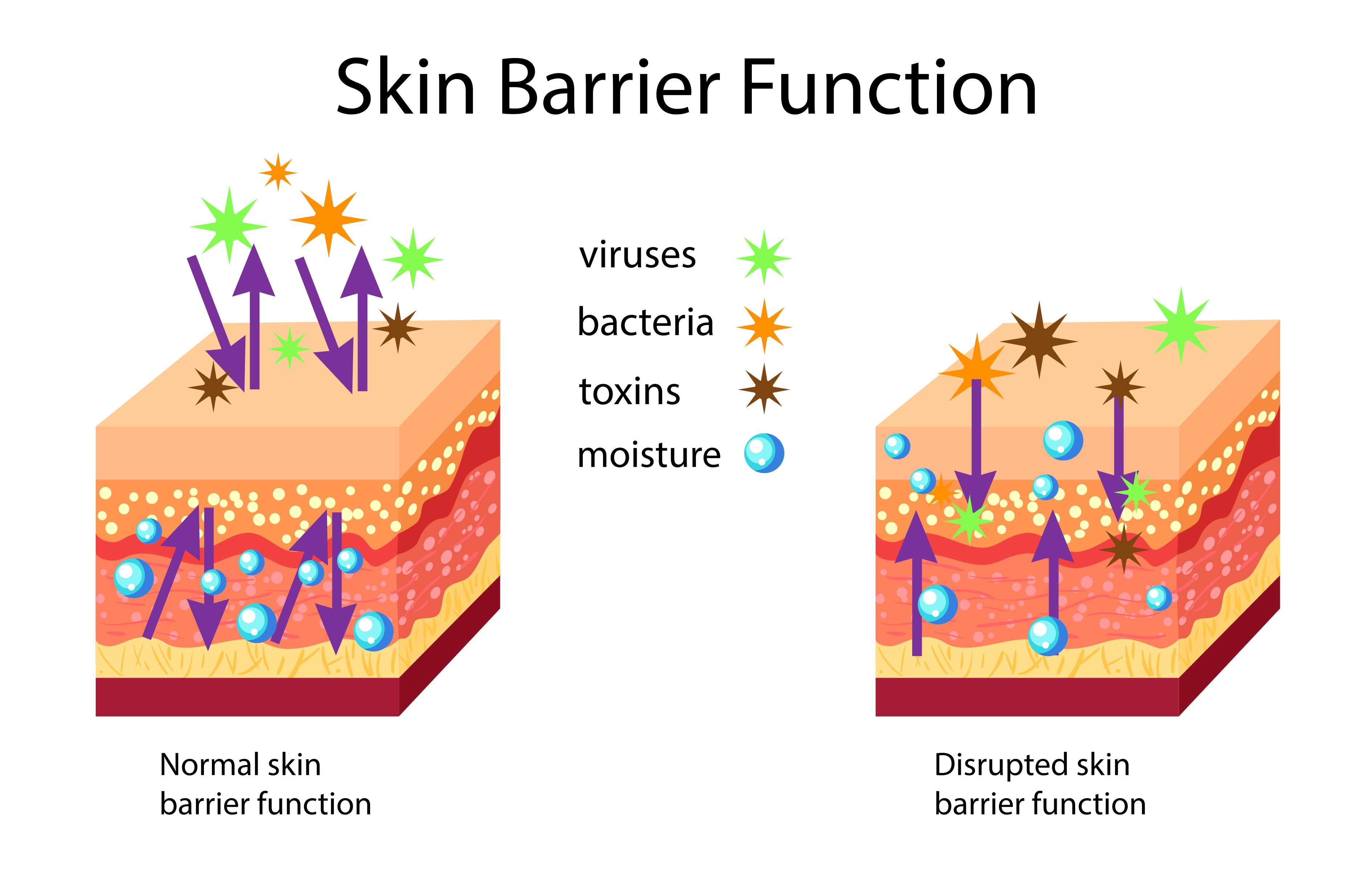
Think of your skin barrier (technically the stratum corneum) as a brick wall. The skin cells are the bricks, and the lipids—fats like ceramides and cholesterol—are the mortar holding them together.
How the Skin Barrier Protects Your Skin
Its job is simple but vital: keep the “good stuff” (hydration and moisture) in, and the “bad stuff” (bacteria, pollutants, and irritants) out. This biological shield prevents transepidermal water loss (TEWL), which is just a fancy way of saying it stops your skin’s water from evaporating into thin air.
Why a Healthy Skin Barrier Is Important
When the “mortar” is strong, your skin looks plump, bouncy, and glowing. When it’s cracked, irritants seep into the deeper layers, causing inflammation that leads to premature aging and chronic sensitivity.
Signs of a Damaged Skin Barrier
Dryness, Flaking, and Tight Skin
If your skin feels parched no matter how much oil you apply, or if you notice “micro-flaking” around your nose and mouth, your barrier is leaking moisture.
Redness, Irritation, and Sensitivity
Does putting on plain water make your face turn pink? A damaged acid mantle makes the nerve endings in your skin hyper-reactive to everything.
Breakouts and Increased Skin Reactivity
Ironically, a broken barrier can lead to more acne. When the barrier is weak, “bad” bacteria like P. acnes can easily colonize your pores, leading to tiny, itchy bumps and clusters of breakouts.
Common Causes of Skin Barrier Damage
Over-Exfoliation and Active Ingredients
This is the #1 culprit in the “skincare junkie” era. Using too many AHAs, BHAs, and high-strength retinols all at once literally strips the protective lipids away.
Harsh Skincare Products
Cleansers that leave your face feeling “squeaky clean” are actually a red flag. High-pH soaps disrupt the naturally acidic environment of the skin.
Sun Exposure and Malaysia’s Humid Climate
While humidity helps with hydration, the intense UV index in Malaysia can degrade skin proteins. According to the Skin Cancer Foundation, UV rays cause oxidative stress that thins the protective outer layer over time.
Environmental Pollution and Stress
Urban pollution creates free radicals that “eat away” at your skin’s natural oils. Combine that with high cortisol levels from stress, and your skin’s healing process slows to a crawl.
How to Repair Your Skin Barrier
Simplifying Your Skincare Routine
The first rule of barrier repair is “The Great Reset.” Put away the serums, the peels, and the vibrating brushes. Go back to a “Basic Three”: a gentle cleanser, a barrier-repair moisturizer, and SPF.
Using Barrier-Repair Ingredients
You need ingredients that mimic the natural fats in your skin. These help “patch” the holes in the brick wall while your body works on deeper repairs.
Avoiding Irritating Products
Avoid denatured alcohol, heavy fragrances, and essential oils like menthol or eucalyptus, which can trigger further inflammation in a compromised barrier.
Best Ingredients for Skin Barrier Repair
Ceramides
Ceramides make up about 50% of your skin’s composition. Applying them topically is like adding fresh mortar to a crumbling wall.
Hyaluronic Acid
This humectant acts as a moisture magnet. It’s essential for binding water to the skin, ensuring the “bricks” stay hydrated and plump.
Niacinamide
Vitamin B3 helps your skin produce its own natural ceramides. It’s a long-term builder that also calms down redness.
Panthenol and Centella Asiatica
Panthenol (Pro-vitamin B5) is a soothing superstar, while Centella Asiatica (Cica) is famous in K-beauty for its ability to speed up wound healing and reduce skin distress.
Skincare Routine for Skin Barrier Repair
Gentle Cleansing
Switch to a non-foaming, creamy, or milk-based cleanser. It should feel like you’re washing your face with a lotion.
Hydrating Serums and Moisturisers
Look for “Skin Identical” formulas. Apply your moisturizer while your skin is still slightly damp to lock in every drop of hydration.
Daily Sunscreen Protection
A physical (mineral) sunscreen containing Zinc Oxide is often better for a damaged barrier because it’s less likely to sting than chemical filters.
Professional Treatments for Skin Barrier Recovery
Dermatologist-Recommended Treatments in Malaysia
In local clinics, look for HydraFacials (the gentle kind) or LDM (Local Dynamic Micro-massage), which uses ultrasound to re-balance the skin’s cellular structure without heat or trauma.
When to See a Skin Specialist
If your skin is oozing, crusting, or if you suspect a fungal infection (which often mimics barrier damage), it’s time to see a board-certified dermatologist.
How Long Skin Barrier Repair Takes
Recovery Timeline for Mild Damage
If you just over-exfoliated once or twice, you can usually bounce back in 2 to 4 weeks. This aligns with the natural 28-day skin cell cycle.
Recovery Timeline for Severe Damage
For chronic damage or “steroid-induced” thinning, it may take 3 to 6 months of strict, gentle care to fully restore the lipid layers.
Common Mistakes That Slow Skin Barrier Healing
Testing “one more” product: Every new ingredient is a potential irritant. Stay boring for a month!
Using hot water: Stick to lukewarm or cool water. Heat dissolves the very oils you are trying to save.
Exfoliating “to get rid of the flakes”: Those flakes are your skin trying to protect itself. Don’t scrub them off; moisturize them down.