


Pico Laser is one of the most advanced medical laser treatments available in Malaysia today. It is widely used by certified aesthetic doctors and dermatologists to treat pigmentation, acne scars, large pores, tattoos, and early signs of aging.
What makes Pico Laser special is its speed and precision. It works in trillionths of a second, which allows it to treat skin problems effectively with less heat, less discomfort, and shorter recovery time. This makes it especially suitable for Asian skin types (Fitzpatrick III–V) living in a tropical climate.
What Is Pico Laser?
Pico Laser is a picosecond laser that delivers ultra-short pulses of energy to the skin. One picosecond equals one trillionth of a second.
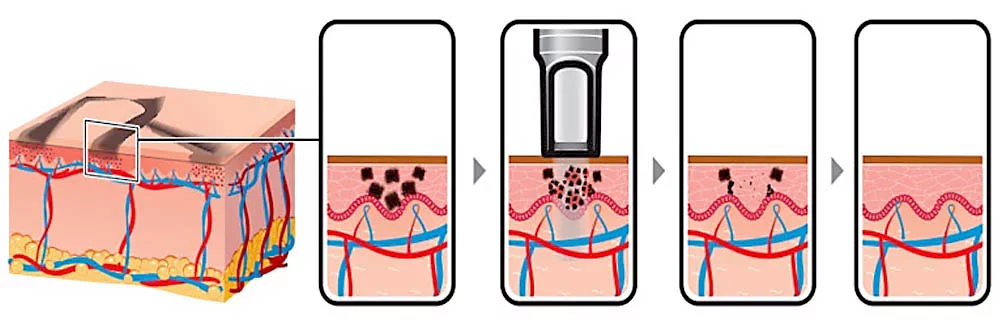
Instead of using heat to burn pigment, Pico Laser uses a pressure-based effect (photoacoustic effect) to shatter pigment into tiny particles. These particles are then slowly cleared by the body’s natural lymphatic system.
Because less heat is used, Pico Laser is:
Safer for darker skin
Less painful than older lasers
Associated with lower risk of post-inflammatory hyperpigmentation (PIH)
Able to treat pigment and texture at the same time
How Pico Laser Works
Traditional lasers rely mainly on heat. Pico Laser works differently.
Picoseconds vs Traditional Lasers
| Feature | Pico Laser | Older Q-Switched Lasers |
|---|---|---|
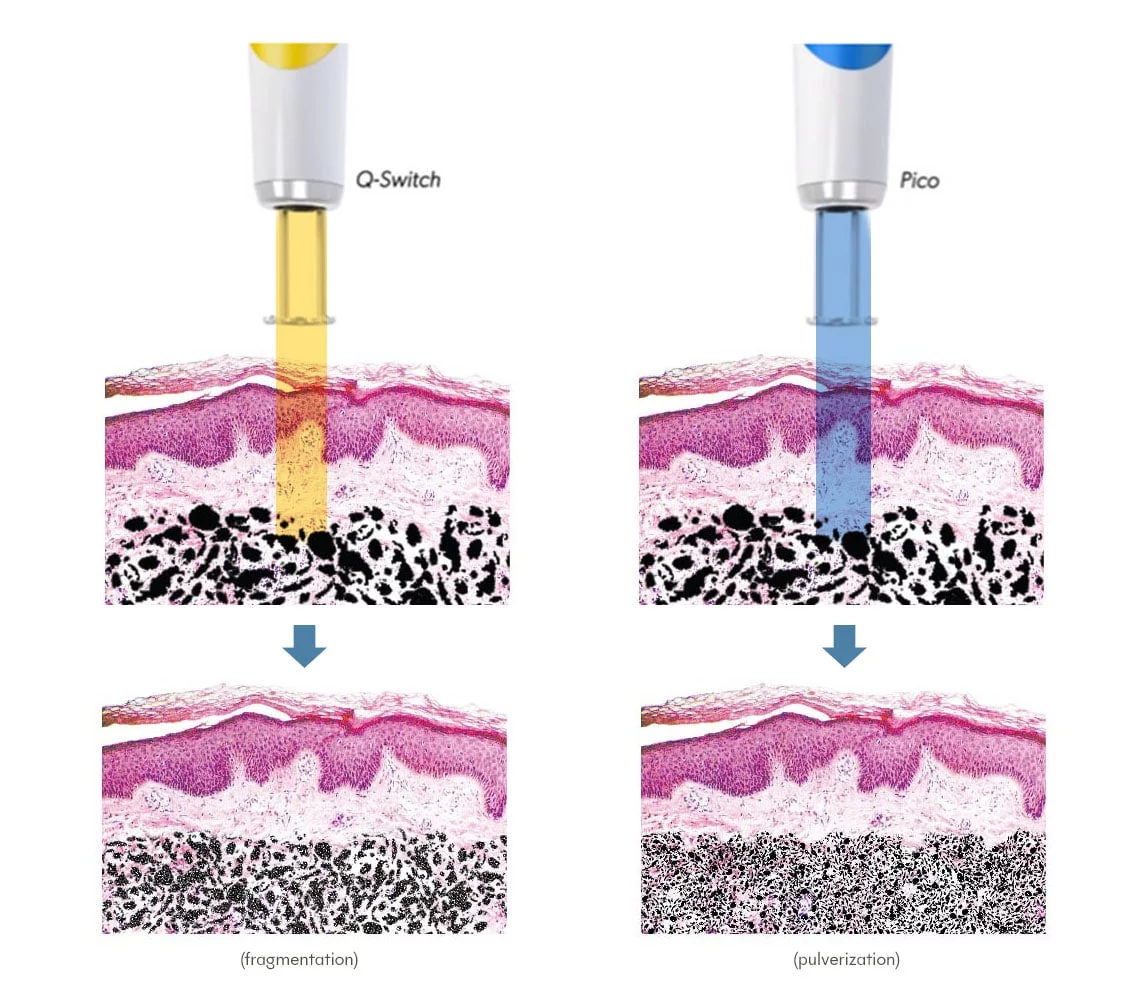
| Pulse speed | Trillionths of a second | Billionths of a second |
| Main action | Pressure (photoacoustic) | Heat (photothermal) |
| Risk of PIH | Lower | Higher |
| Sessions needed | Fewer | More |
The ultra-fast pulse creates a strong pressure wave that breaks pigment without overheating the surrounding skin.
Laser-Induced Optical Breakdown (LIOB)
Pico Laser also triggers a process called Laser-Induced Optical Breakdown (LIOB).
This creates tiny microscopic zones under the skin that:
Stimulate fibroblasts
Increase collagen and elastin production
Improve acne scars, pores, and skin texture
This is why Pico Laser is not only for pigmentation, but also for skin rejuvenation.
Pico Laser Wavelengths and What They Treat
Different Pico Lasers use different wavelengths. Each wavelength targets different skin concerns.
| Wavelength | Best For |
|---|---|
| 532 nm | Freckles, superficial pigmentation |
| 755 nm | Melasma, acne scars, skin texture |
| 1064 nm | Deep pigmentation, tattoos, darker skin tones |
A trained doctor selects the correct wavelength and settings based on your skin type and condition. This step is critical for safety.
Why Pico Laser Is Ideal for Malaysian & Asian Skin
Asian skin contains more melanin. Combined with Malaysia’s strong sun exposure, this increases the risk of pigmentation problems and laser side effects.
Pico Laser is preferred because it:
Produces less heat
Reduces the risk of PIH
Allows better control of energy delivery
Is suitable for Fitzpatrick skin types III–V
Dermatologists often choose Pico Laser for Asian patients because it balances results and safety.
Conditions Commonly Treated with Pico Laser
Pico Laser is versatile and can treat many skin concerns:
Melasma and stubborn pigmentation
Sunspots and freckles
Acne scars and uneven skin texture
Enlarged pores
Tattoo removal (black and coloured ink)
Dull skin and early fine lines
Pico Laser Treatment Process (Doctor-Led)
Medical Consultation
A certified doctor examines your skin and confirms if Pico Laser is suitable.Skin Preparation
The skin is cleaned. Eye protection is worn. Numbing cream is applied if needed.Laser Treatment
The laser is passed over the treatment area. Most sessions take 10–20 minutes.Post-Treatment Care
A soothing cream is applied. Mild redness is normal.Aftercare & Sun Protection
Daily sunscreen and gentle skincare are essential for good results.
How Many Sessions Are Needed?
The number of sessions depends on the condition:
| Condition | Sessions | Interval |
|---|---|---|
| Pigmentation / Melasma | 3–6 | Every 2–4 weeks |
| Acne scars / Texture | 3–5 | Every 3–4 weeks |
| Tattoo removal | 2–10 | Every 6–8 weeks |
| Maintenance | Ongoing | Every 3–6 months |
Results improve gradually over time.
Pico Laser vs Other Skin Treatments
Pico Laser vs Q-Switched Laser
Pico Laser works faster and uses less heat, making it safer for Asian skin.
Pico Laser vs Fractional Laser
Fractional lasers are better for deep scars but have longer downtime. Pico Laser offers gentler rejuvenation with faster recovery.
Pico Laser vs Chemical Peels
Chemical peels work on the surface. Pico Laser treats deeper pigment and collagen.
Safety, Risks & Medical Responsibility
When performed by trained doctors, Pico Laser is very safe.
Common Temporary Effects
Mild redness
Slight swelling
Warm sensation
Rare Risks (Usually from poor aftercare)
Prolonged pigmentation
Blistering
Scarring
Strict sun avoidance and sunscreen use are the most important safety rules.
Medical Disclaimer: Results vary between individuals. A proper medical consultation is required before treatment.
Typical Pico Laser Prices in Malaysia (2025 estimates)
Full Face Treatment: Approximately RM 800 – RM 1,500 per session
Small Area / Spot Treatment: Around RM 300 – RM 900 per session
Acne Scars / Deep Texture: About RM 1,000 – RM 2,500 per session
Tattoo Removal: Roughly RM 300 – RM 2,000 per session, depending on size and color
First-Trial Specials: Some clinics offer trial prices much lower (e.g., RM 188–RM 498), often with package promotions
Cheaper treatments are not always safer. Doctor expertise and device quality matter more than price.
Frequently Asked Questions (FAQs)
1. Is Picosecond Laser safe for dark or sensitive skin?
Yes. When performed by a trained doctor, Picosecond Laser is safe and effective for dark or sensitive skin. It minimizes heat, reduces risks, and suits Asian skin types well.
2. Can Picosecond Laser permanently remove melasma?
Melasma can improve significantly with Pico Laser, but it cannot be permanently cured. Consistent maintenance treatments, strict sun protection, and skincare routines are essential to manage recurrence and maintain results.
3. Why does pigmentation sometimes look darker first?
After Picosecond Laser treatment, pigment may temporarily darken as it rises to the skin’s surface. This is a normal part of the clearing process, gradually fading over the following days or weeks.
4. How long is the downtime?
Most patients experience minimal downtime after Picosecond Laser. Redness or slight swelling may occur but usually resolves within 24 hours, allowing you to return to normal activities quickly and safely.
5. Is Picosecond Laser painful?
Picosecond Laser treatment is generally well-tolerated. Mild discomfort or warmth may occur, but numbing cream is applied to ensure the procedure remains comfortable for all skin types.
Evidence-Based Facts
Picosecond laser safely improves melasma and skin texture in Asian patients.
A prospective study using a 1064 nm picosecond laser in Asian skin found significant reduction in melasma severity and improved overall skin rejuvenation, with no hypo‑ or hyperpigmentation reported. PubMed
https://pubmed.ncbi.nlm.nih.gov/33544930/Fractional picosecond laser is effective and safe for acne scars and skin quality.
A clinical trial on a 1064 nm fractional picosecond laser showed significant improvement in acne scars, wrinkles, skin elasticity, and firmness, with only mild short‑term side effects. PubMed
https://pubmed.ncbi.nlm.nih.gov/34079185/
Conclusion: A Smart Choice for Clear, Healthy Skin
Picosecond Laser is considered the gold standard of modern laser treatment in Malaysia. It offers effective results for pigmentation, acne scars, tattoos, and skin rejuvenation with minimal downtime and high safety, especially for Asian skin.
When performed by experienced medical professionals, Pico Laser provides visible improvement while protecting long-term skin health.
Best Aesthetic Specialist in Malaysia provides Picosecond Laser treatments for pigmentation, acne scars, and skin rejuvenation. Our certified dermatologists use advanced, FDA-approved lasers. Treatments are safe, effective, and tailored to Asian skin. Patients get expert care with minimal downtime.
References
Lee JH, Kim YJ, et al. Network meta-analysis of 1064 nm picosecond laser for melasma: efficacy and safety. PubMed. https://pubmed.ncbi.nlm.nih.gov/37116000/
Wang C, Huang Y, et al. Systematic review of picosecond lasers in dermatology: treatment of pigmentation, acne scars, and skin rejuvenation. PubMed. https://pubmed.ncbi.nlm.nih.gov/32282094/
American Society for Laser Medicine and Surgery (ASLMS). Guidelines and recommendations for picosecond lasers in dermatology. ASLMS. https://www.aslms.org/about-aslms/media-center/news/2020/05/20/guidelines-and-recommendations-for-picosecond-lasers-in-dermatology