
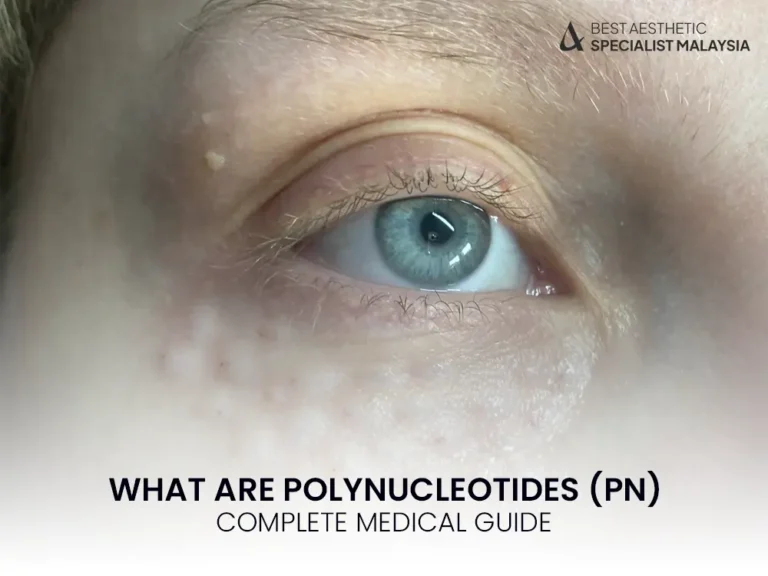


Polynucleotides (PN) are highly purified DNA fragments used in advanced skin rejuvenation. They improve hydration, repair cellular damage, and enhance collagen production. PN treatments promote healthier skin structure, reduce inflammation, and support wound healing. Clinically, they offer a regenerative alternative to injectables for texture, elasticity, and overall skin quality.
At Best Aesthetic Specialist Malaysia, polynucleotide (PN) treatments are delivered by experienced aesthetic and medical professionals using evidence-based protocols. Our clinicians ensure safe, precise PN applications tailored to individual skin needs, supported by advanced technology, strict medical standards, and a proven track record in regenerative aesthetic care.
1. Introduction

Polynucleotides (PN) are bioactive DNA chains derived from purified fish (commonly salmon or trout) that support skin repair and regeneration. In aesthetic medicine, PN injectables help restore hydration, improve dermal structure, and stimulate long-term tissue remodeling. Their regenerative mechanism makes them valuable for patients seeking natural, sustained skin improvement.
Read More : Rejuran Treatment In Malaysia
2. What Exactly Are Polynucleotides?
Polynucleotides are long DNA fragments composed of nucleotides (adenine, guanine, cytosine, thymine). In medical aesthetics, they are processed into ultra-purified, biocompatible chains with exceptional water-binding and wound-healing properties.
Key Characteristics
Biocompatible and highly purified
Strong hydrophilic capacity
Anti-inflammatory action
Supports fibroblast activity and collagen synthesis
Acts as a scaffold for tissue regeneration
3. How Polynucleotides Work in the Skin
PN deliver therapeutic effects at the cellular level through several evidence-based mechanisms:
3.1 Hydration and Water Retention
PN attract and bind large amounts of water, restoring internal hydration in the extracellular matrix and improving skin turgor.
3.2 Fibroblast Activation
They stimulate fibroblasts—cells responsible for producing collagen, elastin, and extracellular matrix proteins—leading to stronger dermal architecture.
3.3 Anti-Inflammatory Effects
PN reduce free radicals and oxidative stress. This minimizes inflammation and supports healing in compromised or photoaged skin.
3.4 DNA Repair and Tissue Remodeling
By providing nucleic acid fragments, PN create a regenerative environment that enhances cellular repair pathways and improves overall skin quality over time.
4. Benefits of Polynucleotide Treatments
Patients typically experience:
Improved hydration and glow
Enhanced skin elasticity and firmness
Better texture and fine line reduction
Reduced visible inflammation
Support for acne-prone or sensitized skin
Faster recovery after procedures (laser, chemical peels, microneedling)
Softer appearance of scars or photoaging
Results appear gradually, reflecting true tissue regeneration rather than superficial plumping.
5. Treatment Indications
PN are clinically used to treat:
Dull, dehydrated, or thin skin
Fine lines and early aging
Acne-related inflammation
Pigmentation and photoaging
Under-eye hollowness or crepiness
Scarring
Skin barrier dysfunction
Post-procedure recovery
They can be applied to the face, neck, periocular area, scalp, and body.
Read More : Salmon DNA Injection Treatment In Malaysia
6. Procedure Overview
6.1 Treatment Process
Cleanse and prepare the skin
Topical numbing (optional)
Micro-injections or cannula deposition into the superficial dermis
Gentle massage to distribute the product
6.2 Treatment Course
Typically 2–4 sessions, spaced 2–4 weeks apart
Maintenance every 6–12 months
6.3 Downtime
Minimal. Mild swelling or pinpoint bruising may occur for 24–48 hours.
7. Safety Profile
PN have an excellent safety record due to their high purification level and biocompatibility.
Potential Minor Effects
Temporary redness
Mild swelling
Small bruises at injection sites
Allergic reactions are rare because PN do not contain animal proteins—only purified DNA fragments.
8. Polynucleotides vs Other Injectables
| Feature | Polynucleotides | Hyaluronic Acid (HA) | Skin Boosters |
|---|---|---|---|
| Mechanism | Regenerative, fibroblast-stimulating | Hydration and volume replacement | Hydration and mild stimulation |
| Longevity | Long-term tissue remodeling | Temporary volume | Short-term hydration |
| Best For | Structure, repair, inflammation | Volume loss | Glow and hydration |
| Onset | Gradual | Immediate | Quick |
PN are ideal when the goal is natural rejuvenation with biological repair rather than instant filling.
9. Who Is a Good Candidate?
This treatment suits patients who want:
Natural rejuvenation without altering face shape
Support for sensitive or aging skin
Collagen regeneration
Under-eye improvement
Long-term structural benefits
Not recommended for individuals with active infection, uncontrolled medical conditions, or pregnancy.
10. Aftercare Guide
Avoid intense exercise, sauna, or steam for 24 hours
No makeup for 12 hours
Use gentle skincare and SPF
Avoid alcohol and blood-thinning medications immediately after treatment (unless medically prescribed)
Results build progressively over several weeks.
11. FAQs
1. Are polynucleotides safe?
Yes. PN are highly purified, biocompatible, and have a strong safety record in regenerative medicine.
2. How long do results last?
Most patients maintain improvements for 6–12 months. Maintenance sessions extend benefits.
3. Are PN the same as PDRN?
PDRN is a subtype of PN with specific molecular size. Both stimulate regeneration, but PN formulations may vary in concentration and chain length.
4. Do polynucleotides replace dermal fillers?
No. PN regenerate tissue but do not add immediate volume. They complement fillers by improving skin quality.
5. Are polynucleotide injections painful?
The procedure is generally comfortable. Topical numbing gel can be applied.
6. How soon do you see results?
Hydration improves within days; structural improvements appear over weeks as collagen production increases.
7. Can PN be used under the eyes?
Yes—PN are widely used for the delicate periocular area to improve crepiness, fine lines, and mild hollowness.
Conclusion
Polynucleotides represent a scientifically backed, regenerative approach to skin rejuvenation. Their ability to repair, hydrate, and strengthen the dermis makes them a leading treatment for patients seeking healthy, natural-looking improvements. With a strong safety profile and long-term clinical benefits, PN are a cornerstone of modern aesthetic medicine.